Flight Training · Advanced Rating
Fly in real weather. On instruments. On time.
The Instrument rating is the difference between flying on calm Saturdays and flying as transportation. We'll get you there on a structured Part 141 syllabus, in IFR-capable Diamond aircraft you already know how to fly.
Program overview
The rating that turns a license into transportation.
Without an Instrument rating, your Private certificate is a fair-weather license. With one, you can file an IFR flight plan, fly through clouds, shoot approaches into airports you’ve never seen, and use general aviation the way it was always meant to be used — as serious transportation. Most pilots who don’t earn the rating eventually stop flying. Most pilots who do never look back.
Our Instrument program is built for pilots who already know how to fly an airplane and now need to learn how to fly the system. The curriculum is heavy on procedure, planning, and judgment — areas where we think most schools cut corners. You’ll work through a Part 141-approved syllabus we authored ourselves, paired with a senior CFII from your first lesson, and you’ll do most of your training in our DA40 NG fleet — modern, IFR-capable Diamonds with the Garmin G1000 NXi avionics suite that’s now the de facto standard in general aviation.
Two paths, your choice
Part 141 or Part 61. Both finishable.
Two FAA routes to the rating. We offer both — Part 141 if you can fly daily, Part 61 if you're fitting it around work.
Part 141
Accelerated, structured.
2 months
From first lesson to checkride
● FAA-approved syllabus, 35-hour minimum (vs. 40 under 61)
● Progress checks at completion of each stage with a senior CFII
● Sim time fully credited toward minimums
● Best for career-track and PPL→IFR back-to-back students
Built to finish in 60 days when you fly five days a week. Most career-track students choose this path.
Part 61
Flexible, on your schedule.
3–6 months
Depending on lesson frequency
● Same instructors, same airplanes, same standard
● 40-hour minimum, more flexibility on sequencing
● 50 cross-country pilot-in-command hours required (FAR 61.65)
● Train at your own pace around work and weather
● Best for working pilots and weekend students
Built for pilots fitting training around a job or family. Most working pilots choose this path.
Curriculum
Three phases, in order.
A Part 141 syllabus we authored — heavy on procedure, planning, and judgment. The same standard for every student.
Phase 1
Basic attitude instrument flying
Sole reference to instruments, basic maneuvers under the hood, holding patterns, and unusual attitudes. Sim time is heavy in this phase.
Phase 2
Procedures & cross-country
Departures, en-route navigation, holds, and instrument approaches — VOR, ILS, LPV, and RNAV procedures, in the airplane and on IFR cross-country flights.
Phase 3
Checkride prep
Stage check, oral preparation, mock checkride with a senior CFII, and the FAA practical exam with a designated examiner.
Aircraft you'll fly
The DA40 NG, set up the way you'll actually use it.
Instrument training at TFA is taught in the Diamond DA40 NG with the Garmin G1000 NXi glass cockpit and a GFC 700 autopilot — the same avionics suite found in modern Cirrus, Beechcraft, and certified business aircraft. You won't transition to a different platform when your rating arrives; the airplane you train in is the airplane you'll keep flying.
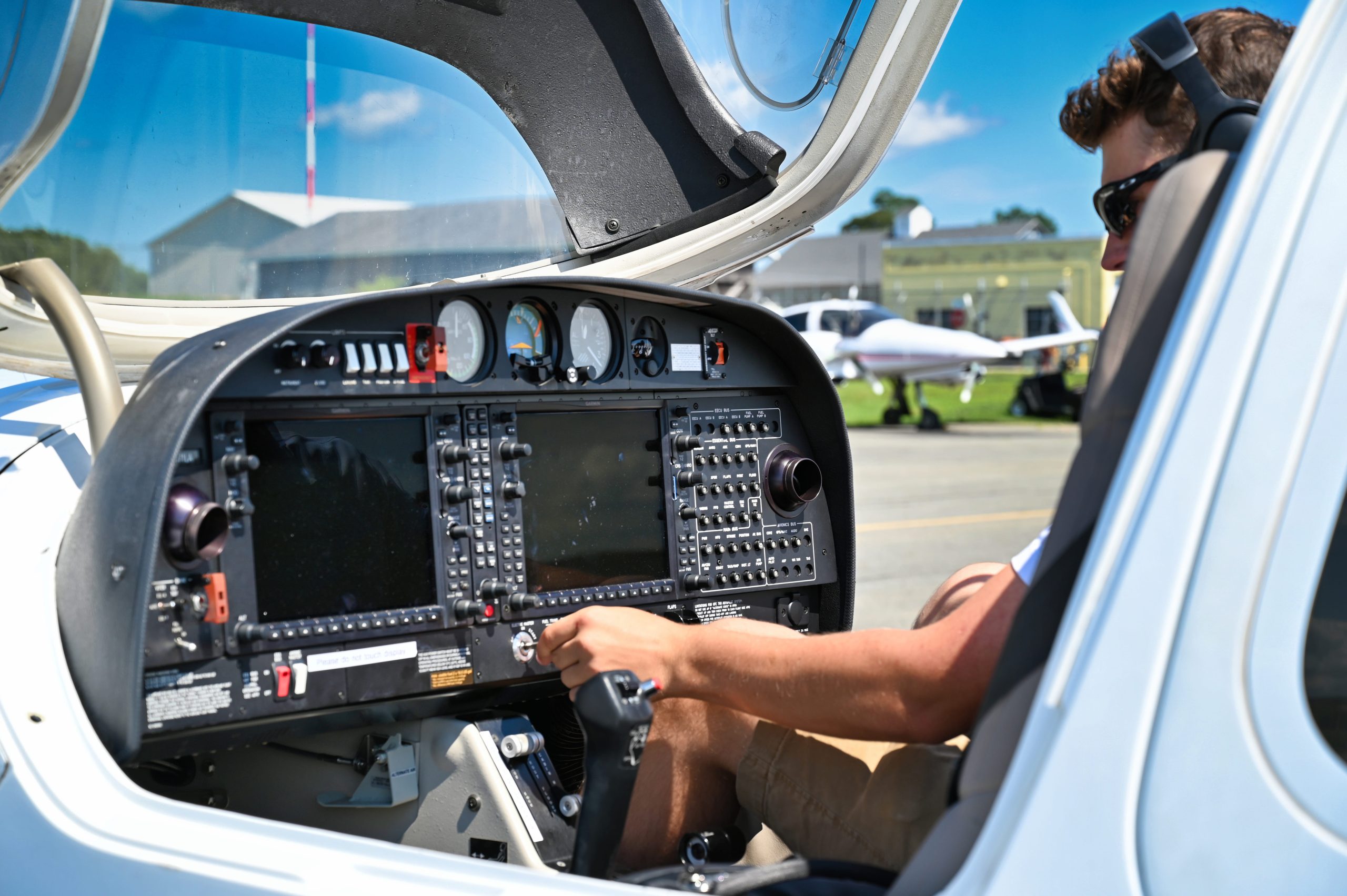 DA40 NG · PHOTO
Supporting the program
Redbird FMX simulator. The expensive procedures, learned cheaply.
Holds, missed approaches, partial-panel work, and emergency procedures cost a lot of fuel and tach time to practice in the airplane. Our Redbird FMX full-motion simulator lets you drill those procedures dozens of times for a fraction of the cost — and every approved hour counts toward your minimums.
FAA-approved AATD · Garmin G1000-equivalent panel · Available throughout the program
Who this is for
Three pilots. One rating.
The new Private pilot
You finished your PPL recently and want to keep training while everything is fresh. PPL→IFR back-to-back is the most efficient way to keep building.
The career-track student
You're aiming at the airlines. The Instrument rating is non-negotiable on the path to Commercial and ATP. Ask us about the Zero-to-Professional pathway.
The pilot with a stalled rating
You started Instrument training somewhere else and never finished. Bring your logbook — we'll evaluate where you stand and finish the rating on a clear plan.
Eligibility
FAA requirements, the short version.
To begin training
● Hold a current FAA Private Pilot certificate
● 50 hours of cross-country PIC time, per FAR 61.65 (Part 61 path; can be in progress)
● Read, speak, and understand English
● FAA medical (third class minimum)
To earn the rating
● Pass the FAA Instrument written knowledge test
● Complete the required instrument flight time and training
● Pass an oral and practical exam with a designated examiner
● 50 hours total cross-country PIC time at checkride (Part 61 path; Part 141 students meet aeronautical experience through the approved syllabus)
"I came to TFA already holding my Private and stalled out at another school on Instrument. Six weeks here and I had the rating. The G1000 training and sim time made the difference."
Michael R.
Instrument-rated, 2025
Continue your training
Where Instrument leads.
Commercial pilot
The next certificate. Fly for hire, build hours, and open the door to professional aviation.
Learn more →Zero-to-Professional
The integrated career pathway. Private through CFI on a single coordinated plan.
Learn more →Ready to add the rating?
Reach out and we'll talk through your situation, your goals, and the right path forward — at no cost or commitment.
49 Hangar Road, Hangar D
Montgomery, NY 12549
845-457-4188
Open 7 days · 8 AM – 6 PM